Thursday, July 30, 2015

The Value of Closed Captioning for Reading Proficiency


I was browsing on Twitter today and this article caught my attention: Closed Captioning: An 'Undervalued" Method for Reading Improvement. I am bilingual in English and Spanish and I am an excellent reader in both languages. I grew up in Mexico and graduated with a Bachelor's Degree in Sociology of Education. All my education was in the Spanish language. Nevertheless, when you go to the movie theater in Spanish, you have a choice to watch a movie captioned in the original language or doubled to your native language. I watched most movies with captions in English. My love for the English language started at the movies. Later I decided to formally study English as a Second Language. 

Watching captioned movies is an instructional technique. Foreign language teachers would tell us to do this all the time: listen to music in English while looking at the lyrics, and immersing ourselves in the language we wanted to learn. 
Up to this day, as a Spanish teacher I still use the captioning method for watching movies as an instructional tool. Spanish 1 and 2 students are allowed to hear the movie in English but they have captions in Spanish or the other way around. If I want to challenge students, I play the movie in Spanish with Spanish subtitles and they have to write down words they see and they listen to in Spanish. We call it "focused listening". 

This is a great tool to explore for struggling readers or students with learning disabilities. It makes sense that listening to and seeing the word in print while enjoying a movie the learner likes might boost reading proficiency. 

Friday, July 24, 2015

Trending on Twitter: A Social Justice Approach to Education (Part 2)


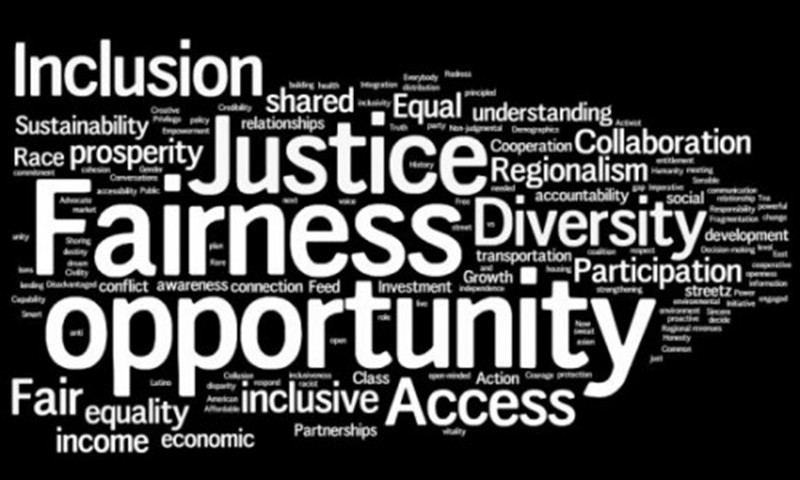
Social Justice is Trending on Twitter. This week I have discovered a few hashtags in Twitter that focus on issues of equality in education. I believe as I was taught, that education is the key to a better life. I consider myself a Social Justice Scholar. My platform, Educator Talk is born from life experiences. I grew up in a low income family, attended public schools and graduated with a degree in Sociology of Education, got a grant to be a Junior Research Scholar at UC Irvine, and came to the United States as an immigrant. I am bilingual and bicultural and I was adopted into the family of Christ, one of the greatest social justice scholars of his time. I feel for the student sitting in my classroom with a hungry stare, a confused look for not understanding English, and a worry in his mind for not being able to fit in and look right. I feel for the parents who have no formal education but want the best for their kids and that is why they send them to school every day with the hope for a better life and a better future. Justice in education is my passion. Justice in education means we need to be willing to stand up, step out, and take a risk. Justice in education means that we are willing to be criticized, be uncomfortable, weary, tired, and heavy laden as teachers, administrators and community members. Justice in education means we believe in our children, we want to protect them, and we want them to be the best they can be.

This week I have found that others feel the same passion. Twitter trending is pointing towards a change. An ethical reform education and education with a social justice approach. There are several hashtags on Twitter that address social justice in education. here are a couple of hashtags that got my attention. 


Trending on Twitter: A Social Justice Approach to Education (Part 1)

This week I have been observing Twitter trending to make connections with other educators and expand my knowledge of ways to use Twitter to give and take from my Personal and Professional Learning Network. One of the trends that got my attention started with one of my contacts

Philipp M. Herzberg started following me on Twitter and I followed him back. His blog is called 
The Education Blog: Where Education Meets Technology and Science.The reason Philip is part of my Professional Learning Network is that he writes interesting blogs with backed research that support an ethical approach to educational reform. He wrote a blog that immediately caught my attention called Equality Is Not Enough Why We Need Justice In Education

My vision and mission for Educator Talk  is to contribute resources with a social justice approach to education. This desire is part of who I am as a person. I grew up in a low income family. My parents have very little formal education – neither one of my parents graduated from high school. Nevertheless, my dad always told me that education was the key. You go to school and get a degree so you can get a decent job with a decent income. You get good grades and you go to college. I still follow my dad’s advice. All that my siblings and I have is because we got educated and attended college. Perhaps we did not get the best education ever but we worked hard to graduate with a degree. Teachers believed in what they did and we, as students, gave it our best. It is still with pride and tears in our eyes that we look at my dad, a self-made man with only two years of elementary schooling that made a living with a strong work ethic, hard work, and commitment. He believed he could do better. He truly believed in the power of education. It is also with tears that we look at mother and thank her for her willingness to not be a stay home mother, provide a secure environment when we got home from school, and give us a positive outlook in life with strength and faith. She also believed in a social justice approach to education, an approach where you do your best, you keep going, and you move on. 


Follow Philipp on Twitter @mikioherzberg


Saturday, July 18, 2015

Connected Educator Interview: Meet Mrs. Patti Patrick

On July 8th, 2015 I had the opportunity to interview Patti Patrick, experienced teacher, administrator, and connected educator. Patti has been a high school science teacher, technology coordinator for Fresno Unified School District, instructional designer, and adjunct professor at Fresno Pacific University. He dedicates part of her professional career to work with students at the Center for Online Learning at Fresno Pacific University. Patti describes a connected educator as someone who has built a platform on different social media outlets as well as someone who connects with other educators online over a variety of topics. In her own words, technology does not replace the teacher but rather gives students the ability to consume, create, and disseminate information and as she states: “to do things that would not be possible without technology”. Patti connects with educators and the community through Linkedin, Twitter, and Moodle communities. The questions that Mrs. Patrick answered for Educator Talk are embedded in the video. 


Thursday, July 16, 2015

The Meaning of a Professional Learning Network


When I went back to school to join the Masters in Educational Technology, my family and I had several concerns regarding the time that needed to be invested in homework and class time.  My husband reluctantly agreed to let me go back to enroll in the Master’s Degree program. He was sincerely worried about the stress, doing homework, and me not being able to enjoy family time together while on vacation. For us, family time is precious. I have now discovered that a Personal Learning Network  works very well with my desire to keep being a mother and wife above all things. How does my Professional Learning Network fit with all of this?

Connections 24/7
I can keep learning and contributing to a network of well-informed educators while on the go. I don’t have to physically be present in a conference, classroom, or meeting place to continue connecting through Twitter. I can learn what I want, when I want and where I want it. I have joined Twitter and I have learned so much about different subject areas and topics of interest. 

Avoiding the Summer Slide
If it is true for kids it is true for me as well. After taking a long summer vacation without any brain work, when I go back to work I feel it. My brain is still baking under the sun, savoring the breeze of the beach. I feel sluggish the first weeks of school and I have to force myself to get back into the routine. Being connected throughout the summer and forcing my brain to intellectually contribute good ideas to my PLN keeps my brain in shape. My brain is already planning for the new school year and incorporating my summer learning into the new school year is exciting.

The Value of Family Time While Pursuing My Passion

As an educator of 20 plus years, I strive for excellence and I can get caught up in my professional aspirations. I often neglect family time. I wanted to spend time on vacation but I was sad I had to miss the interaction with my colleagues during class on Thursdays. Today I had a great connected educators’ experience through my PLN. While still enjoying vacation time with my family, my colleagues shared a Google Doc with me and we LIVE tweeted during the entire class. I was in Southern California and my colleagues in Fresno California. I felt included, I felt like I did not miss out much. That would not have been possible without my PLN. 

Who are you reaching out this summer for professional learning and networking? 

Monday, July 13, 2015

Golf and Teaching: The Challenges of Being a Rookie

The Players


Just like in teaching, golf can be either a group activity or a solo endeavor. Even though a group of people can be there to help you play a good game, they cannot do it for you. They give you advice and techniques, they keep you company and encourage you but they cannot get the ball in the hole. It is up to you to learn from advice, observe, and apply in order to improve. Golfers watch out for other players just as our teaching buddies will be willing to watch out for you.


The Golf Course Map

This is our curriculum map. Each area represents a skill we need to master in teaching. Each poses its own challenges, has specific characteristics, and we have to use appropriate tools to be able to master that particular area. Each area looks different and in order to get there we are required to have achieved and master other areas and skills


The Holes
The only purpose of golf is to navigate a vast and beautiful landscape in order to put a ball in a small little hole….. And so is with teaching. There is so much preparation, sacrifice, training, focus, and skill put into one objective: the learning objective. When we as teachers see that something clicks in a student’s mind, that’s it! We put the ball in the hole or in teaching terms, we have made the learning process come to life!
The Clubs
This one was hard for me. When I learned to play golf, nobody was willing to teach me which club to use for which purpose. I had 12 clubs and they all kind of look like the same. I was using all of them trying to find out which one did what. Just as with our teaching skills and tools, during our first years we are just using whatever we feel might work in order to accomplish our learning objective. After I played golf a few times with some not so newbies, they noticed my mistakes. They told me the rules of choosing the right club for the right purpose. Wow, that hurt my ego, but it did surely improved the way I played. My newly found confidence in playing golf by using the right tool allowed me to keep trying. Just as in teaching, when I am willing to set aside my ego and watch and learn from the pros in teaching, everything becomes clearer and I experience success.
Sand Traps
No golfer, new or experienced likes sand traps. When your ball falls into a sand trap, it requires a certain skill and a particular club to get it out to the faraway in order to keep playing. Your ball can be stuck in there for a while…. Just like in teaching. Challenges, problems, lack of motivation, tiredness, belittlement, gossip, lack of recognition. It is hard when you fall in that place and harder to get out and keep going. Use the right tool and the right technique. Surround yourself with other professionals that will teach you the tricks to move on. 


Golf is not easy, and neither is teaching. Will you persevere? 


Photo Credit Vallarta Golf Castillo 2015 
Photo Credit: Whisper Creek Golf Club, Huntley, Illinois via photopin (license)
Photo Credit: Too good for your home? via photopin (license)
Photo Credit Golf Set Castillo 2015
Photo Credit: Dornoch Golf Bunkers via photopin (license)

Saturday, July 11, 2015

Using Video Conferencing Tools to Connect with Parents by Guest Blogger Cindy Escandon (Originally Published on 7/07/2015)

Unfortunately conference time falls during harvest seasons in the Central Valley.  For many valley educators their parents are back to work in the fields earning a living to support their families.  Some parents may work out of town picking, packing, or pruning.  For many field laborers their work day begins at 5 a.m. and ends at 5 p.m. making it difficult to schedule after school parent-teacher conferences. So often these parents do not want to take a day off from work because of the hit they will endure financially.  So what can educators do to meet with our parents who so desperately want to ensure their child is doing well in school but can not afford to take a day off.  Let's connect with them using video conferencing tools.

Video conferencing tools are a wonderful way to connect personally with parents.  Utilizing a video conferencing tool allows educators and parents to have a conversation in real time from anywhere. These tools also allow teachers to share images and files as well without disruption.  Tools like Face Time and Google Hangouts are simple to use on any digital device. Imagine how empowered your parents will feel knowing that they can connect with their child's teacher without financial penalty.
  
Before you jump into video conferencing please take time to practice to work out all the bugs.  Here is a link to a tutorial video that is useful when beginning to use video conferencing. Next, create a system to collect the contact information of parents who would be interested in video conferencing and the times they would be able to connect.   Last, encourage your parents to continue to invest in their child's education and acknowledge the sacrifices they continue to make to better their family's life.

Cindy Escandon
Educator
Latina Ed Tech Eduator Blog Spot
cescandon@centralusd.k12.ca.us